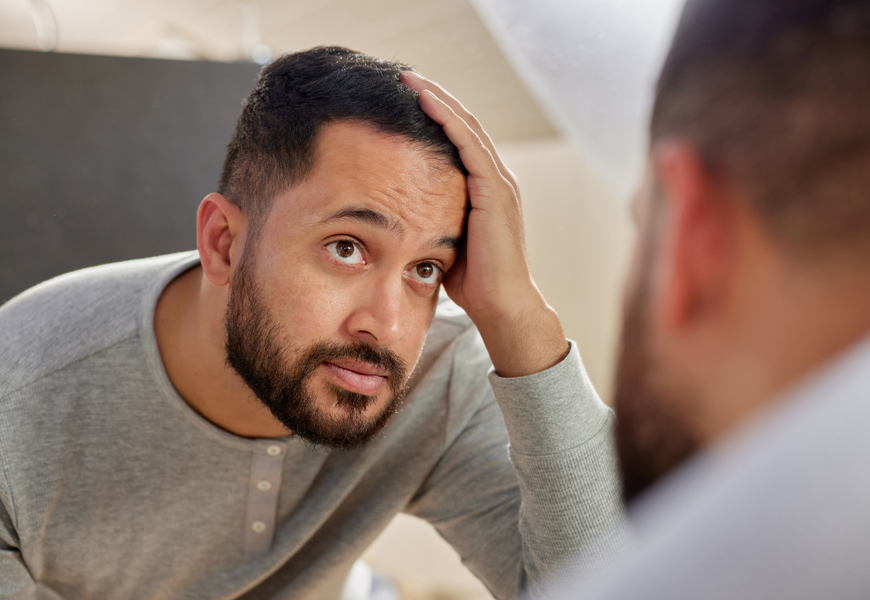
Thinking about cleaning up your diet, trying intermittent fasting or jumping on a quick detox to lean out? Before you overhaul your fridge, you may want to consider what’s happening on your head. While rapid weight-loss plans promise visible results in weeks, the fallout often shows up a few months later—in your hairline, your shower drain and on your pillow.
According to studies published in the National Library of Medicine, sudden or excessive hair shedding is rarely about the shampoo you’re using. It’s usually internal. When you dramatically cut calories, carbs or key nutrients, your body shifts into survival mode. Hair, which has one of the highest metabolic demands in the body, is quickly deemed non-essential. The result? Increased daily shedding and slower hair regrowth. Keep reading as a trichology expert from the UK’s Harley Street Hair Clinic breaks down the most common dieting trends men are trying right now and why your fat-loss strategy could be triggering unexpected hair loss.
Why do diets and detox cleanses often result in hair loss?
“Clinical data confirms that sudden, rapid shedding is almost always caused by internal problems, not haircare,” says a trichology expert at Harley Street Hair Clinic. “But in many cases, it’s a normal biological response. The body thinks you are losing weight because of stress or scarcity and hair is one of the first things it de-prioritizes. When you lose weight fast daily, shedding can increase to around 300 hairs a day, compared to the normal 50 to 100.”
Hair loss and intermittent fasting
Extended fasting, especially when it’s an 18 (non-eating hours) and six (eating hours) split is one of the most common triggers experts see behind reduced hair growth. In a 2024 cell study published in Examine Research found that people following an 18-hour daily fasting window had approximately 18 per cent slower hair growth than those eating normally, even when total calories were similar. “Hair follicles contain the highest metabolic rate of all the tissues within the body,” explains a trichology expert at Harley Street Hair Clinic. “As a result, during fasting, the body is forced to enter a survival mode, where it shuts down hair growth in favour of vital organs.”
Hair loss and detox cleanses and liquid-only plans
Liquid cleanses and detoxes typically provide 30–40 grams of protein per day and have very low levels of iron, zinc and essential fatty acids. A juice-based diet, for example, cannot realistically provide enough protein required for a healthy body and hair. “Your hair needs nutrients to keep growing,” affirms a trichology expert at Harley Street Hair Clinic. “If you are consuming very little protein for an extended period, your body will move more hair follicles into the resting phase, which stops hair growth.”
Hair loss and strict keto or a zero-carb diet
According to the Wimpole Clinic, a London-based hair transplant clinic, nearly 30 per cent of individuals on a ketogenic diet experience excessive hair shedding. “Hair growth occurs because of hormonal growth signals, not simply from the amount of calories you consume,” says a trichology expert at Harley Street Hair Clinic. “As the body begins conserving energy, growth signals are reduced, putting a pause on hair growth.”
Your final takeaway
If you’re noticing rapid or excessive hair loss and you’re dieting or detoxing, maybe it’s time to stop. “When hair starts shedding months after a diet, people assume it’s a routine issue, but biologically it’s a delayed stress response,” explains a trichology expert at Harley Street Hair Clinic. “Hair loss is the body’s early warning sign that weight loss has become too stressful and something needs to change.”