By Adriana Ermter
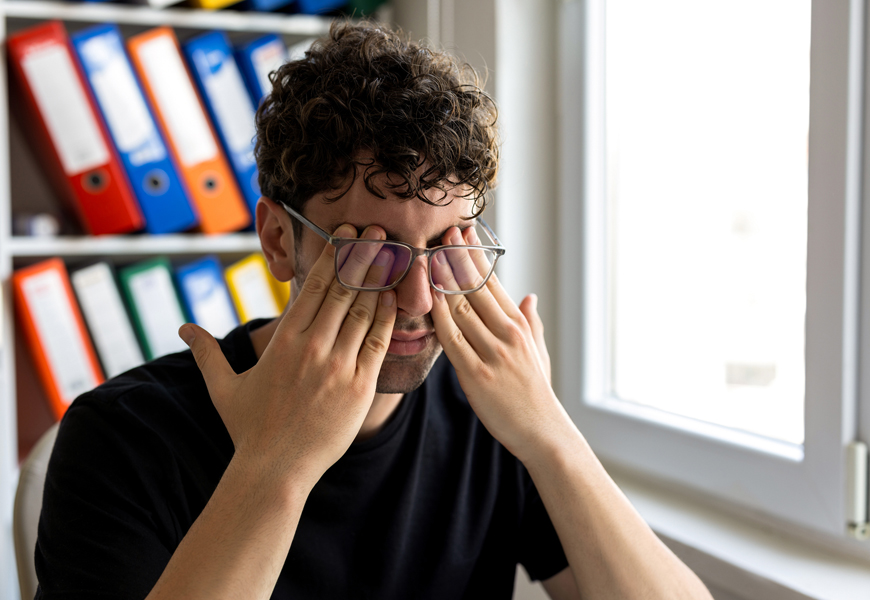
We’ve all read the health and wellness articles telling us to follow the 20-20-20 rule—every 20 minutes, look 20 feet away from your screen, for 20 seconds—to help prevent tired and overwhelmed eyes…but are you doing it? After all, the Canadian Association of Optometrists warns that prolonged screen time can lead to eye strain and blurred vision. Never a good thing. Which is why the experts at Overnight Glasses, an online glasses company, are sharing four tips to better support your eyes for everyday life.
Tip 1: Use Eye Drops
Applying over-the-counter artificial tears in drop form in your eyes, multiple times throughout the day can help replenish your eyes’ moisture. Additionally, blink often. Blinking helps promote the natural tears your eyes need for lubrication. You can also soak your eyes by holding a warm washcloth against your eyelids for five minutes morning and night.
Tip 2: Eat for Better Night Vision
Your eyes rely on key nutrients, such as vitamin A, lutein and zeaxanthin, to perform their best. Vitamin A creates the pigment needed for night vision, while lutein and zeaxanthin help with glare and contrast. Without these, your eyes will have a harder time to focus on headlights or road signs at night. “These nutrients are like internal glasses for your eyes,” say the experts at Overnight Glasses. “One study found that these nutrients can improve glare recovery by 26 per cent, helping your eyes bounce back faster from bright headlights or sudden flashes of light.” Add more leafy greens, egg yolks, carrots, and fatty fish to your diet. Just one intake of any of these nutrients will help your eyes stay sharp, even after sunset.
Tip 3: Adjust Your Car’s Interior Lighting for Nighttime
Your car dashboard could be messing with your night vision, even if you had a full night of sleep. Bright dashboards, flashy infotainment screens and LED lights can cause eye strain, making it harder to see clearly at night while driving. “Your eyes can’t lock into two light settings at once,” say the experts at Overnight Glasses. “If your cabin is brightly lit, your vision stays stuck in daylight mode and struggles to adjust to the darkness outside. That mismatch makes road signs harder to read, increases glare from oncoming cars, and can slow your reaction time without you even noticing.”Dim your dashboard and infotainment screens. If possible, switch displays to a darker theme or night mode while driving.
Tip 4: Put Down Your Smart Phone
Staring at your phone late at night isn’t just ruining your sleep. It’s also messing with your eyes. The blue light from screens decreases melatonin, the hormone that helps your eyes adjust to darkness. Without enough melatonin, your eyes take longer to switch into “night mode,” making glare and contrast even worse. In fact, just a quick glance at a bright white screen can reduce dark adaptation by 80 per cent, with effects lasting for up to 20 minutes. “If you go straight from TikTok to the driver’s seat, your eyes might still be stuck in daylight mode,” say the experts at Overnight Glasses. “It’s like trying to drive through fog while wearing sunglasses.”