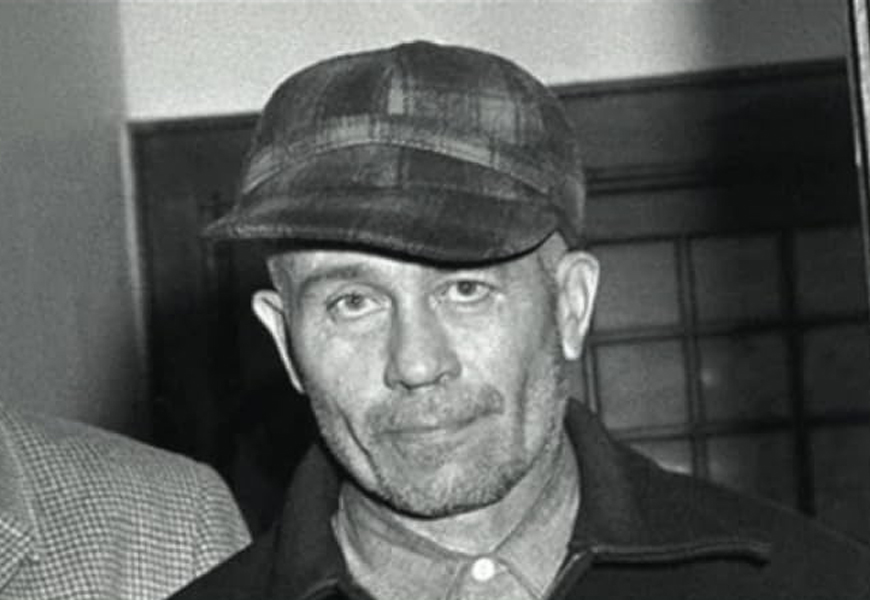
When it comes to infamous killers whose crimes forever changed pop culture, few loom larger than Ed Gein. His twisted legacy is less about body count—he was convicted of two murders—than about the grotesque details discovered inside his rural Wisconsin farmhouse in 1957. Those details would go on to inspire some of horror’s most enduring villains, from Psycho’s Norman Bates to The Texas Chainsaw Massacre’s Leatherface and The Silence of the Lambs’ Buffalo Bill.
If you’re not up on your serial killers, but the name sounds familiar it might be because Netflix has a new season of Ryan Murphy’s popular anthology series Monster quickly approaching, and it’s focused on Ed Gein. Monster: The Ed Gein Story, starring Charlie Hunnam as the infamous killer, drops on October 3, 2025. The official description for the series reads:
“Serial killer. Grave robber. Psycho. In the frozen fields of 1950s rural Wisconsin, a friendly, mild-mannered recluse named Eddie Gein lived quietly on a decaying farm – hiding a house of horrors so gruesome it would redefine the American nightmare. Driven by isolation, psychosis, and an all-consuming obsession with his mother, Gein’s perverse crimes birthed a new kind of monster that would haunt Hollywood for decades. From Psycho to The Texas Chain Saw Massacre to The Silence of the Lambs, Gein’s macabre legacy gave birth to fictional monsters born in his image and ignited a cultural obsession with the criminally deviant. Ed Gein didn’t just influence a genre — he became the blueprint for modern horror.”
But beyond the grisly headlines, there are layers of strangeness and nuance to Gein’s life that are often overlooked. Before the Netflix series comes out… Here are 10 lesser-known facts about the “Butcher of Plainfield” that may surprise you.
1. His crimes weren’t discovered until a missing person search
Gein’s atrocities only came to light after the disappearance of hardware store owner Bernice Worden in 1957. Police followed a trail of receipts to his farm, where they not only found her body but also the macabre “trophies” that would make his name infamous.
2. He grew up under his mother’s suffocating influence
Gein’s mother, Augusta, was a religious zealot who preached the evils of women and forbade her sons from forming relationships outside the family. Her domination over Ed was so absolute that after her death, he sealed off her rooms as a shrine, leaving them untouched while the rest of the farmhouse decayed.
3. His “furniture” was as grotesque as it sounds
When police searched his farmhouse, they found lampshades made from human skin, bowls fashioned from skulls, and even a belt crafted from nipples. These details horrified the public and cemented his reputation as one of America’s most macabre figures.
4. He didn’t technically fit the “serial killer” label
Although Gein is often referred to as a serial killer, most experts argue he doesn’t meet the definition. He was definitively linked to two murders (Bernice Worden and tavern owner Mary Hogan) but is not believed to have killed in large numbers. His notoriety comes more from grave-robbing and body mutilation than serial killing.
5. He was a prolific grave robber
Gein admitted to exhuming corpses from local cemeteries. He targeted graves of middle-aged women who resembled his mother, bringing their remains home to fashion into clothing and household items. Police later exhumed several graves and confirmed his confessions.
6. He may have been experimenting with making a “woman suit”
Investigators believed Gein’s ultimate goal was to fashion a suit made of women’s skin so he could “become” his mother. This chilling detail became a major influence for Buffalo Bill in *The Silence of the Lambs*.
7. He was declared legally insane
At trial, Gein was found not guilty by reason of insanity and committed to Central State Hospital for the Criminally Insane. He spent the rest of his life in psychiatric institutions, where staff described him as quiet and polite—far from the monster portrayed in headlines.
8. His home was destroyed by fire under mysterious circumstances
In 1958, while Gein was already confined, his farmhouse burned to the ground. Locals suspected arson, though it was never proven. Many saw it as poetic justice—the destruction of a house that had become a chamber of horrors.
9. His grave became a target for morbid curiosity
After his death in 1984, Gein was buried beside his family in Plainfield Cemetery. His gravestone was repeatedly vandalized and eventually stolen in 2000. It was later recovered in Seattle and now resides in a museum. His actual grave remains unmarked, though locals still leave flowers or tokens.
10. Pop culture turned him into an American monster
Though his actual crimes were limited, the details were so shocking that they transformed Gein into a cultural archetype. Alfred Hitchcock’s Psycho debuted just three years after his arrest, and Leatherface in *The Texas Chainsaw Massacre* is perhaps the most enduring (and grotesque) pop-culture echo of his crimes.
RELATED: