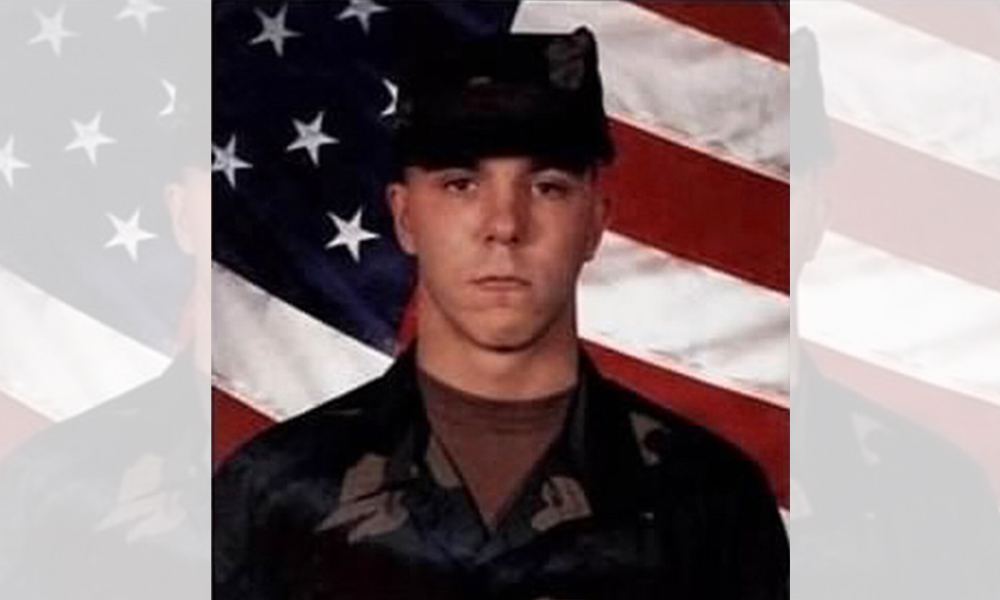
In July 1999, Private First Class Barry Winchell was killed in his barracks after months of anti-gay harassment. His death forced a national reckoning with the U.S. military’s “Don’t Ask, Don’t Tell” policy—and the culture it allowed to persist.
Private First Class (Pfc.) Barry Winchell of the 101st Airborne Division is now remembered as one of the earliest and most tragic victims of the U.S. military’s “Don’t Ask, Don’t Tell” (DADT) policy—a directive that, from February 28, 1994, to September 20, 2011, barred openly gay, lesbian, and bisexual people from serving.
In the early hours of July 5, 1999, Winchell was murdered in his barracks at Fort Campbell, Kentucky, one of the largest Army installations in the United States. He was 22 years old.
At approximately 2:00 a.m., while Winchell slept on his cot, he was attacked by fellow soldier Private Calvin N. Glover, who beat him repeatedly with a Louisville Slugger baseball bat. According to testimony, Specialist Justin R. Fisher—Winchell’s roommate—encouraged the assault. Both men had reportedly been drinking heavily throughout the day.
Winchell never regained consciousness. He was transported to Vanderbilt University Medical Center in Nashville, Tennessee, where he died the following day, July 6, 199, from massive head injuries. Reports described his injuries as so severe that his face was swollen beyond recognition.
In the weeks leading up to the attack, rumours had circulated on base that Winchell—who was from Kansas City, Missouri—was gay. It later emerged that he had been in a relationship with Calpernia Addams, a transgender woman and performer he met at a Nashville nightclub. Their relationship, and the speculation surrounding his sexuality, made him a target.
Subsequent investigations revealed that Winchell had endured repeated anti-gay harassment from fellow soldiers. A report by the Servicemembers Legal Defense Network found that this abuse was not only persistent but widely known within his unit—raising serious questions about leadership, accountability, and the broader culture within the military at the time.
The case drew national attention, arriving just weeks after the conviction of two men in the murder of Matthew Shepard, a gay university student in Wyoming. Together, the two cases underscored the pervasive and often deadly consequences of anti-LGBTQ+ violence in late-1990s America.
At trial, Glover was convicted of premeditated murder and sentenced to life in prison. Fisher was sentenced to 12 and a half years for his role in the attack, though he ultimately served just seven.
In the aftermath, Winchell’s mother, Patricia Kutteles, and her husband, Wally, became outspoken advocates for change. Speaking publicly, they called for a re-examination of “Don’t Ask, Don’t Tell,” arguing that the policy not only failed to protect LGBTQ+ service members, but actively contributed to a culture of silence and vulnerability.
Winchell’s death became a flashpoint. Advocacy groups, lawmakers, and military officials were forced to confront the human cost of a policy that required secrecy while offering little protection. Legal challenges to DADT began to mount in the years that followed, as critics argued that it institutionalized discrimination rather than preventing it.
Although “Don’t Ask, Don’t Tell” would remain in place for more than a decade after Winchell’s death, his story played a crucial role in shifting public opinion. When the policy was finally repealed on September 20, 2011, it marked the end of a deeply controversial chapter in U.S. military history—one shaped, in part, by the life and loss of Barry Winchell.
Today, his case remains a sobering reminder of the consequences of silence, and of the lives that were shaped—and, in some cases, lost—under policies that failed to protect those they governed.